


If you’re interested in the influence of the stars, you might be curious about the other signs and their corresponding constellations. Since these signs have a long history that borrows from multiple cultures, their significance and facts can be difficult to determine. However, by examining the zodiac constellations in the sky, you can better understand them.
In this blog, we'll explore the zodiac constellations and signs and their origins and meaning. Then, we'll demonstrate how you can find your zodiac sign and gaze upon its constellation.
What Are Zodiac Constellations and Signs?
The zodiacs are symbols assigned to constellations and birth months originating from the ancient civilizations of Mesopotamia, Egypt, and Greece. These civilizations grouped stars into constellations and gave them names based on their culture.
In particular, the zodiac names refer to mythological figures and animals across these different cultures. Often, their myths come from Greek culture. In addition, ‘zodiac' originates from the ancient Greek word for animal. More specifically, 7 of the constellations' names refer to animals.
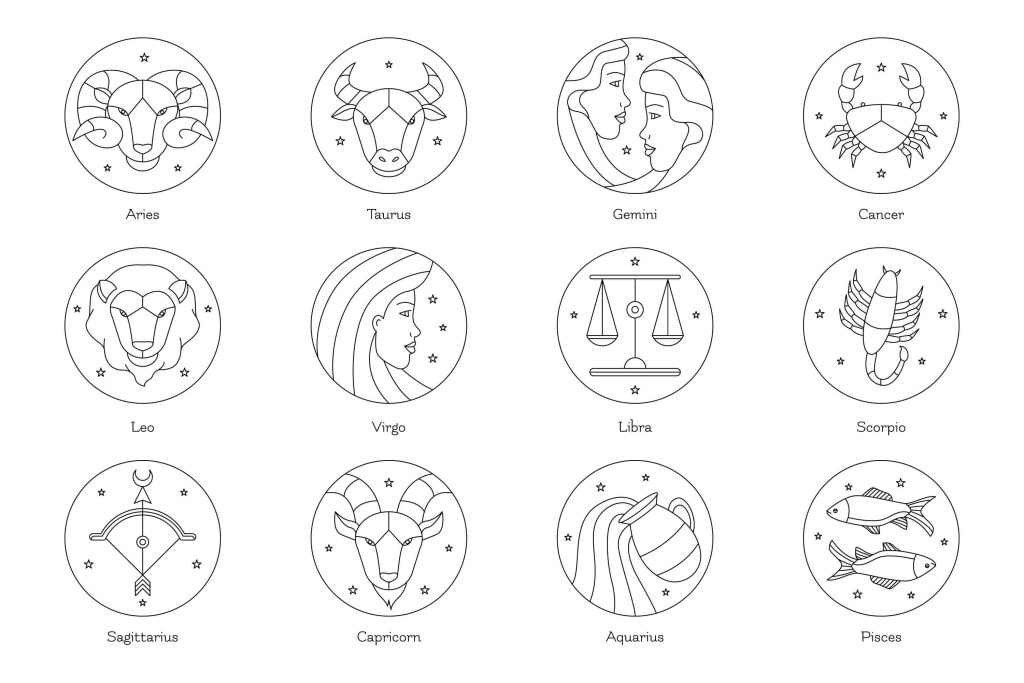
Here's a table of these constellations and their meaning:
Let's dive deeper into the significance of the zodiac constellations and signs.
In Astronomy
In astronomy, certain groups of stars in the sky are zodiacs. In fact, ‘Astronomy' has roots in the Greek language, meaning ‘measurement' or ‘arrangement' of ‘stars'. Therefore, the zodiacs are a convenient way of categorizing areas of the sky and locating celestial objects.
More specifically, the zodiac constellations are in the area of the sky where you can see the sun during the year. You can call this area of the sky the ‘ecliptic'.
Moreover, the zodiacs take different amounts of space and stay in your view from Earth for different amounts of time. The Sagittarius constellation is visible for 32 days. Meanwhile, the constellation that's visible for the shortest time (7 days) is Scorpio.
In Astrology
Astrology, the ‘science' or ‘knowledge' of the ‘stars', created the zodiac signs and constellations. Ancient civilizations used it to understand both how the planets move and how they affect humans.
Those who believe in astrology think that they can divine your personality traits based on the zodiac sign associated with your birth month. Along with planetary and moon positions in the sky, they believe your zodiac sign will influence your life and destiny.
Each zodiac constellation has a corresponding month based on the ancient 30-day and 12-month calendar. In this calendar, each constellation takes up 30º of the star map. In addition, the zodiac signs have followed this calendar for thousands of years.
In Navigation
Since these groups of stars are present in specific areas in the sky, people use them to navigate. Sailors used zodiac sign star maps to guide themselves ― especially when there were no landmarks nearby.
For example, sailors could use the positions of the constellation Aries to figure out their general position. Alternatively, they could use constellations to find the stars that would help them find their location.
In Farming
Across cultures, the zodiac constellations have been guides in planting and harvesting. In fact, past Mesopotamian civilizations believed that the position of the stars in the sky influenced the success of their farming activities. Meanwhile, in Ancient Egypt, they used the zodiac constellations to estimate when the Nile would flood, which would create optimal conditions for planting in the area.
In Culture
The zodiac signs have permeated a variety of cultures. Trying to understand these cultures with these signs can offer a better understanding of the themes and ideas they find important. For example, the ancient Greeks attached myths to zodiac signs, immortalizing their Gods in their conception of the stars.
How Many Zodiac Constellations Are in the Sky?
Originally, there are 12 zodiac constellations. These groups of stars have remained constant for at least 2,500 years. However, there is a 13th constellation that lies in the ecliptic line: The Ophiuchus. Nevertheless, astrologists do not accept this constellation as a zodiac and astronomers consider it to be part of the Hercules group of constellations.
How To Find Your Zodiac Constellation
If you desire to locate your zodiac constellation, you must first understand how they have changed over time. Each zodiac sign has had its specific birth month since at least the 5th century BC. However, due to how celestial bodies move, these signs no longer indicate your zodiac constellation. Therefore, you can't simply stargaze during your birth month.
Instead, you'll need to find the month that corresponds to your zodiac constellation. While the dates of when the constellations appear change over time, you can use this table of constellations and birthdays to identify the best time to gaze upon these groups of stars:
Conclusion
Now you know that the zodiac constellations in the sky are groups of stars on the ecliptic line. They have cultural significance, such as transmitting myths about deities. Moreover, they have practical uses such as navigation and scheduling farming activities.
Each zodiac sign originally had a connection to their constellations. However, due to the movements of objects in the sky, this alignment no longer exists. Instead, these signs have a link to your birth month. Astrologists believe you can use these signs to determine your personality, life, and destiny. So, you can use the table provided to easily discover your zodiac constellation based on your birth month.
Ready to capture your special moment?
Create Your Star Map →