


The Science
How our Star Maps Work
Our star maps are drawn from a database of millions of stars in ESA's Hipparcos and Gaia catalogues, the same authoritative data professional astronomers use worldwide. The below is a condensed scientific article on our process, evolution and verification of our Star Maps.
 By Marin Lukas, Astronomical Developer · Published October 2023 · Updated 4 October 2026
The quick version
For every star map we calculate your exact coordinates, the Earth's rotation to the minute, the position and brightness of every star above your horizon, the Earth's slow wobble and nod, and the Milky Way, matched to your sky.
- Your real sky. Every map is calculated for your exact date, time and place, from multiple star databases and real photographic images of the night sky.
- Tested and verified. Checked against independent professional astronomy software built on NASA data, every star lands within a fraction of the width of a human hair on our largest print.
- Right for any date. We correct for the Earth's slow wobble and nod, so a map for 1975 or 2045 is as accurate as one for today.
- Printed with care. Made on a Canon imagePROGRAF PRO-2600 professional photo printer, with more stars on bigger prints.
1.0 More Space More Stars
Stars are chosen by their brightness, measured as magnitude (see 1.4). The bigger the print, the more room there is for detail, so bigger prints include fainter stars.
Real stars from one of our 60x80 prints, brightest to faintest. Each square is 16mm of the print.
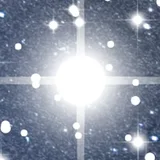
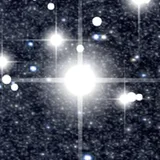
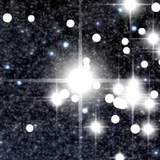
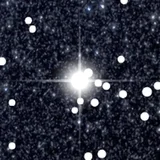
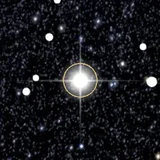
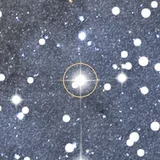
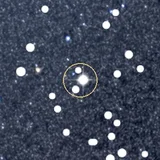
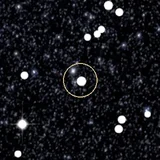
Numbers are magnitude: the lower the number, the brighter the star. Your eye can see down to about magnitude 6 on a dark night; the gold-edged star is only on 40x50 prints and bigger.
You can also ask for your star map with more or fewer stars. As standard, each size uses the level that suits it best.
1.1 Calculated Precisely
Picture the Stars draws from a database of millions of stars in ESA's Hipparcos and Gaia catalogues, the same authoritative data professional astronomers use worldwide, combined with other sources to enhance the detail of your sky.
For every star, our data holds its brightness (magnitude), its colour and its celestial position (Right Ascension and Declination).
The amount of stars in our combined database is so extensive it would be visually unappealing to display them all, there would be very little blank space (if any).
As such we have optimised the amount of stars to be shown based on Magnitude (star brightness) those stars which are brightest and most visible to the naked eye are always printed. Also we have adjusted this measurement to allow more stars to be displayed on higher print sizes as we have more space on the print to do so.
1.2 Geographical Coordinates
Geographical coordinates are a system used to specify locations on the Earth's surface. Our systems use Google Maps API to accurately determine this variable, the user can simple search via their postcode, city or even place name. Geographical coordinates are based on the Earth's reference ellipsoid, a model that approximates the Earth's shape as an oblate spheroid (a sphere flattened at the poles).
The coordinates are illustrated on the star map using the following denominations:
Latitude
is the angular distance north or south of the Earth's equator. It is measured in degrees and ranges from 0° at the equator to 90° at the North and South Poles. The equator itself is defined as 0° latitude. Positive latitudes are used for locations in the Northern Hemisphere, while negative latitudes are used for locations in the Southern Hemisphere.
Longitude
is the angular distance east or west of a reference meridian, typically the Prime Meridian, which passes through Greenwich, London, UK. It is also measured in degrees and ranges from 0° to 180° east or west. The Prime Meridian is defined as 0° longitude, with positive longitudes to the east and negative longitudes to the west.
It is also possible to manually select the coordinates numbers – this will effect the stars position in real time.
It is also possible for the user to change the location text only to something more personal such as "Lydia's Tree House" however the numbers denoting this location will not change. Unless the otherwise specified on a separate data field, all accessible on the product page.
The geographic location on earth is one major vector for the calculation of your star map.
1.3 Celestial Coordinates
Objects in space such as stars use a combination of Right Ascension and Declination to precisely locate their position.
Right Ascension (RA) is similar to longitude on Earth, measuring the angular distance eastward from the vernal equinox, which is the point where the Sun crosses the celestial equator during the spring equinox.
Declination (Dec) on the other hand, is akin to latitude on Earth and measures the angular distance north or south of the celestial equator. It is expressed in degrees, with positive values for objects north of the celestial equator and negative values for objects south of it.
Accurate measurements of celestial coordinates are crucial for the creation of star maps.
Our star maps include an optional grid map which help determine the position of celestial objects.
1.4 Magnitude / Star Brightness
Astronomers measure how bright a star looks from Earth with a scale called apparent magnitude. It goes back over 2,000 years, to the Greek astronomer Hipparchus, who sorted the stars he could see into six classes: the brightest first magnitude, the faintest he could see sixth.
Today the scale is precise. The lower the number, the brighter the star, and each step of one magnitude is about 2.5 times fainter than the last, so a magnitude 6 star is 100 times fainter than a magnitude 1 star. The very brightest objects go below zero.
Sirius, in Canis Major, is the brightest star in the night sky at magnitude −1.46. For comparison, Venus can reach about −4.6, the full Moon −12.7 and the Sun −26.7.
How bright a star looks depends on both how much light it gives out and how far away it is. Sirius looks brightest because it is close, about 8.6 light years away. Rigel, in Orion, gives out thousands of times more light but is hundreds of light years further off, so it looks fainter.
On a clear, dark night away from city lights, the eye can see stars down to about magnitude 6; in a town, often only to magnitude 3 or 4. The star data behind our maps goes far deeper, to millions of stars, but printing them all would crowd the sky. So we print every star you could see on a dark night and a little beyond, down to magnitude 6.8 on an A4 and 7.3 on our largest 60x80 print, as shown in 1.0.
1.5 Star Catalogues and Sky Images
Our designs use a sky built from photographs of the night sky stitched together, each with its own colour and depth; Watercolour uses a painted sky instead.
When your map is made, our system wraps that image around your sky with exactly the same maths as the stars, including the corrections in 2.0 and 2.1, so the Milky Way sits precisely where it was among your stars that night.
1.6 Compass
The optional inclusion of a compass/coordinates with our star maps was mainly added as a visual aid however this created an interesting issue.
Geographically here on Earth we are used to the compass directions North, East, South and West, in that order, going clockwise.
However a traditional Star Map is used to navigate the night sky an astronomical plane.
And the way in which traditional star maps display this is counter intuitive at first. Going clockwise, a star map reads North, West, South and East. East and West are effectively switched, because you are looking up at the sky rather than down at the ground. This although sounds counter intuitive is in fact the opposite when it comes to using the star map to navigate the night sky.
Understandably however this looks wrong from a customers point of view, and users will be using this primarily as decoration and not to navigate.
This is how we solved this
Rightly or wrongly other website effectively switch these directions before production. So they will swap East and West. Although we understand the appeal of doing this as the star map will look "right" the map is no longer a traditional star map and is effectively back to front.
Our solution was simple we removed the East, South and West labels on the print, and retained the North. This means our star maps are still accurate traditional star maps however will not be perceived as looking wrong with the unfamiliar labelling of the directions.
1.7 Enhanced Milky Way
The Milky Way is our own galaxy seen from the inside: a band of billions of stars too faint to see one by one, with dark lanes of dust running through it. On a clear night away from city lights it arches across the sky, and on your map it runs exactly where it did on your date.
For the most realistic Milky Way, with its natural colours, dust lanes and bright star clouds, we recommend the Real Photo design. Every other design uses the same sky as its starting point, with its own colour and depth. On the Original Black Star Map the Milky Way is a soft, subtle grey, to keep its clean, classic look.
1.8 Our Star Map Designs
Every design shows exactly the same calculated stars for your date, time and place. Only the look of the sky behind them changes.
- Original Black: the classic star map. White stars on black, with a soft grey Milky Way.
- Real Photo: a photographic Milky Way in its natural colours. Our most realistic sky.
- Mystic Night: the photographic sky in deep night blues.
- Photo Zoom: a darker, deeper photographic sky, and the only design that shows the stars in their real colours, from warm orange to cold blue, taken from each star's colour in the catalogue.
- Starlight: the photographic sky in warm, golden tones.
- Watercolour: an artistic sky, a painted cosmos by a digital artist, matched to the Milky Way. The stars are still calculated exactly; only the colour behind them is art.
1.9 Constellations
The option to display constellation optional and can be turned on and off, when turned on the lines between the stars are depicted on the printed star map.
There are 88 constellations however not all will show up at once as some are in the northern hemisphere and some are only visible in the southern hemisphere, there is considerable overlap however all based on location and time. You can see this for yourself by trying different places and times in our star map builder.
2.0 Precession: the Earth's Wobble
The Earth's axis wobbles slowly, like a spinning top, completing one full wobble roughly every 26,000 years. Astronomers call this precession. It turns the whole sky by one degree about every 72 years, so the view of the stars from Earth drifts slowly over time.
The stars themselves barely move; it is the Earth that changes the direction it faces. Star catalogues record every star's position for a fixed moment, the year 2000, so a star map that doesn't correct for precession drifts further from the real sky every year. Our systems correct for it, setting the Earth exactly as it was facing on your date, so a star map for 1975 or 2045 shows the sky as it really stood that night.
2.1 Nutation: the Earth's Nod
On top of the slow wobble, the Moon's pull makes the Earth's axis nod slightly, repeating every 18.6 years. Astronomers call this nutation. It shifts the view of the sky by up to about 0.005 degrees, and our systems correct for it too.
2.2 Atmospheric Refraction
Before starlight reaches your eyes, it passes through the Earth's atmosphere, which bends it like a lens. Near the horizon a star appears lifted by up to about half a degree; directly overhead the effect all but disappears. The amount changes with the temperature and air pressure on the night.
Because it depends on the weather at that moment, no calculated star map can include it exactly. Our maps show the stars' true positions, which is the standard for star charts and astronomy software alike.
2.3 Tested and Verified
We test the star positions from our map engine against independent professional astronomy software built on NASA's JPL data. Every new map is made with the most precise version of our engine.
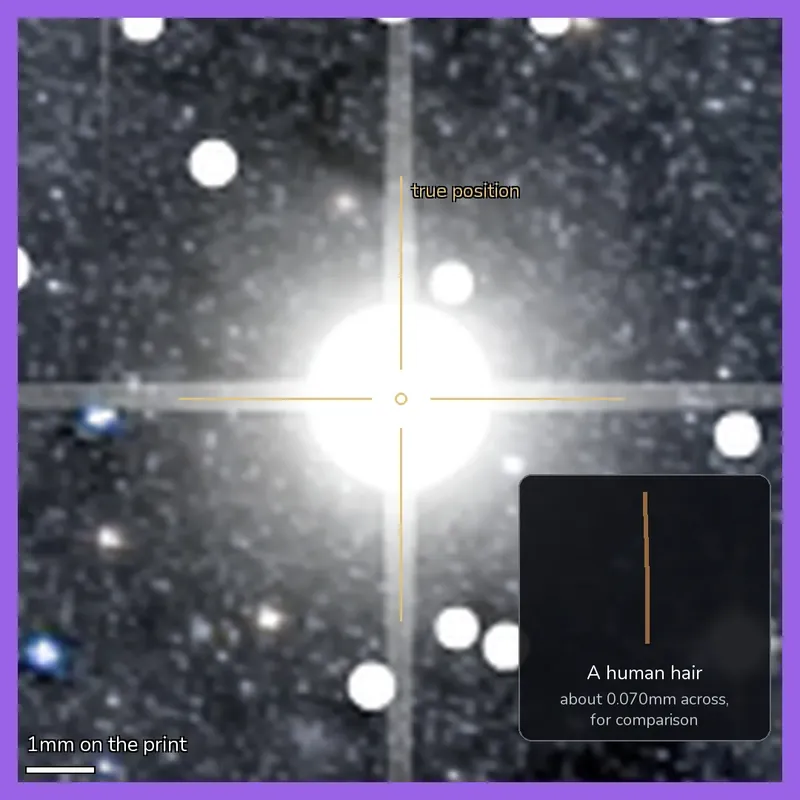
We checked 25 star positions across London, Manchester, Edinburgh and Sydney and four different decades. On average our stars sit 0.005 degrees from their true position, and the largest gap was 0.007 degrees. On our largest print, the 60x80cm, that is under 0.02mm, less than a third of the width of a human hair. On an A4 it is under 0.01mm. Either way, far too small for any eye to see.
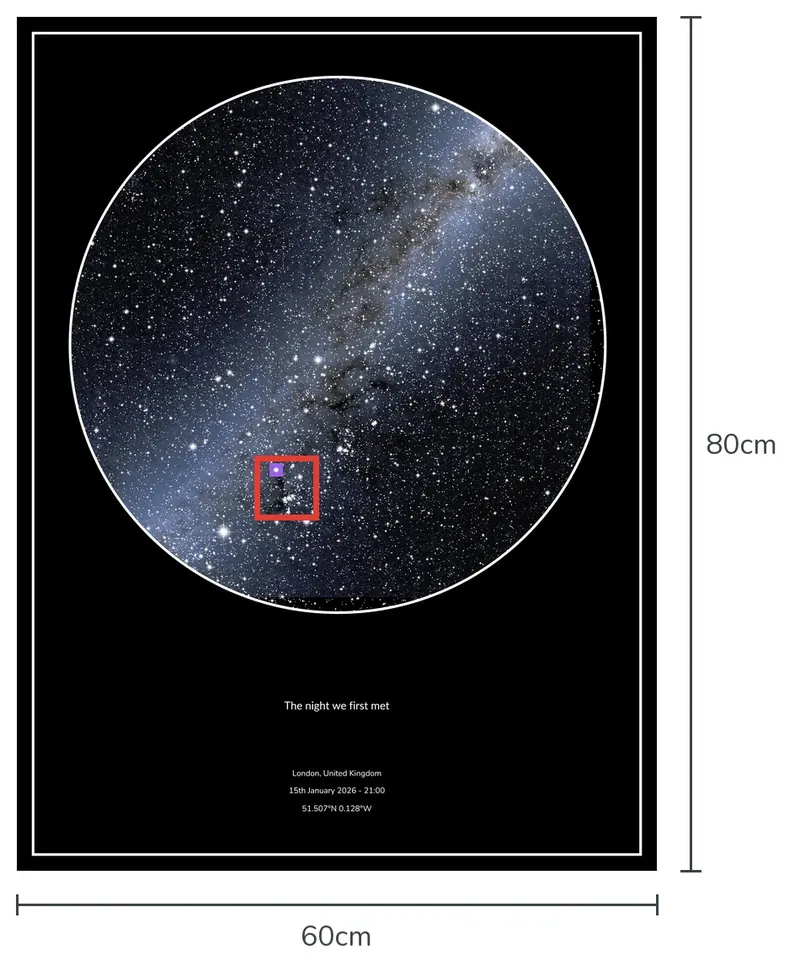
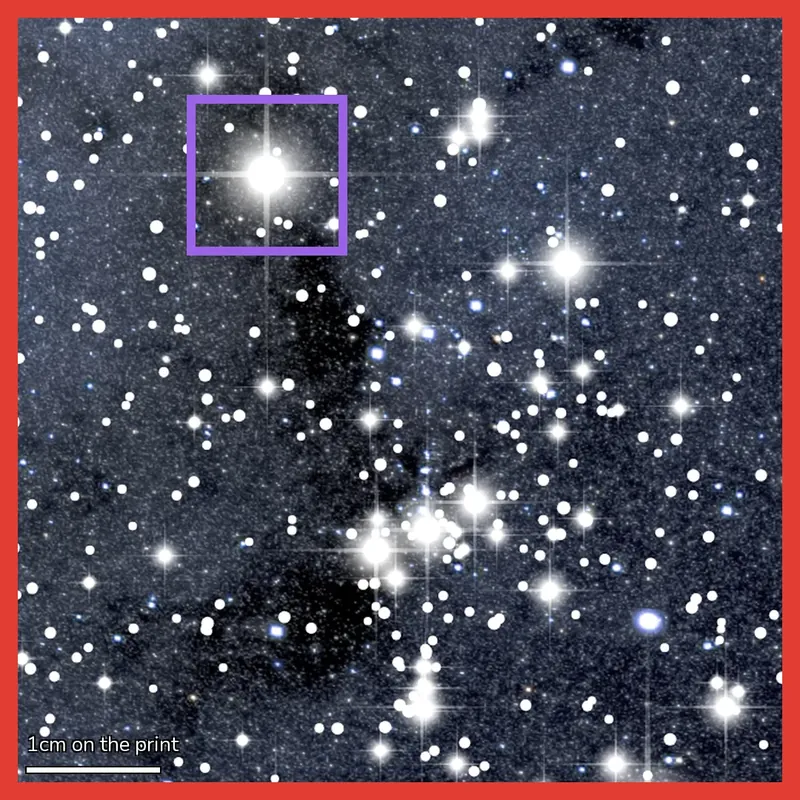
Here is what that looks like on a real 60x80 print, zooming in twice on one star.
Precise to a fraction of a human hair
On paper, our stars are placed as precisely as printing allows. Every print is made on a Canon imagePROGRAF PRO-2600 professional photo printer, which lays ink in dots 300 to the inch, each about 0.085mm across. Measured against independent professional astronomy software, the largest difference is under 0.02mm on a 60x80, less than a third of the width of a human hair and under a quarter of a single printed dot. The real sky itself never holds still either; the air bends starlight a little differently every night, depending on the weather. You can check any of our maps yourself: enter the same date, time and place into free astronomy software such as Stellarium and compare the constellations.
Ready to Create Your Own Star Map?
Capture your special moment in the stars with our scientifically accurate and beautifully crafted star maps.
Create Your Star MapAbout the author
Marin Lukas, Astronomical Developer
Marin Lukas works with Picture the Stars as astronomical developer. Marin joined in 2020 and pioneered the Culmination Moon Map Method™, which renders each moon map at the moment the Moon is highest in the customer's sky, so the Moon shown is one that was visible from their chosen place. Marin works on how our star and moon maps are calculated, and photographs the night sky and the Moon using long-exposure equipment.
More about Marin