


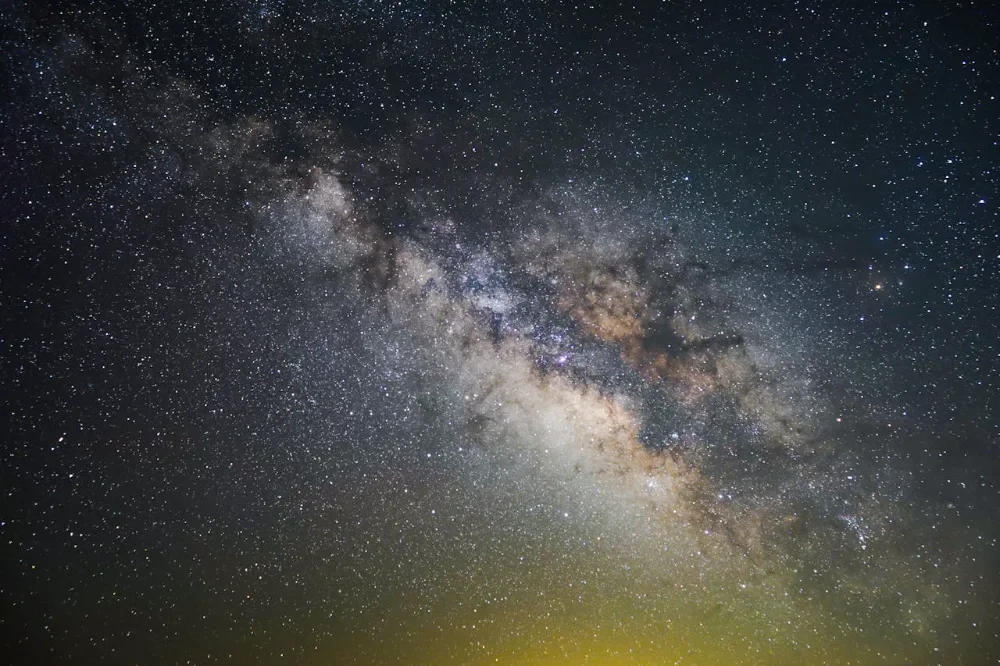
Star gazing is an interesting experience that many people love to do. But have you ever wondered how many stars are in the sky? It may be difficult to get a definite answer by counting with your naked eyes or using a telescope. Astronomers have, however, discovered ways to count or estimate the number of stars in our night sky.
In this blog, we will delve into the number of stars in the sky and learn how many there are or how they are grouped.
How Do Stars Form?
Let's first look at that before we find out how many stars exist in the night sky.
A star is a celestial body made up of hydrogen and helium gas. It starts its formation from the nebula cloud, which is filled with gas and dust floating between existing stars in space. The gas and dust form the protostars after being pulled together by gravity, forming the hydrogen atoms.
The heat created from packing the atoms together forms the protostar. At its core, the hydrogen atoms also fuse into helium ions, thus starting the star's life. The energy from the star's core produces energy and heat, enabling the star to shine bright in the night sky.
Looking up at the night sky, you might think a star is really small. However, this is not true. The smallest, for example, is the OGLE-TR-122b, with a radius of 103,768 miles (167,000 kilometers). It appears smaller because the starlight travels millions of distances before reaching Earth, allowing us to view it with our naked eyes.
How Many Stars Are In The Sky
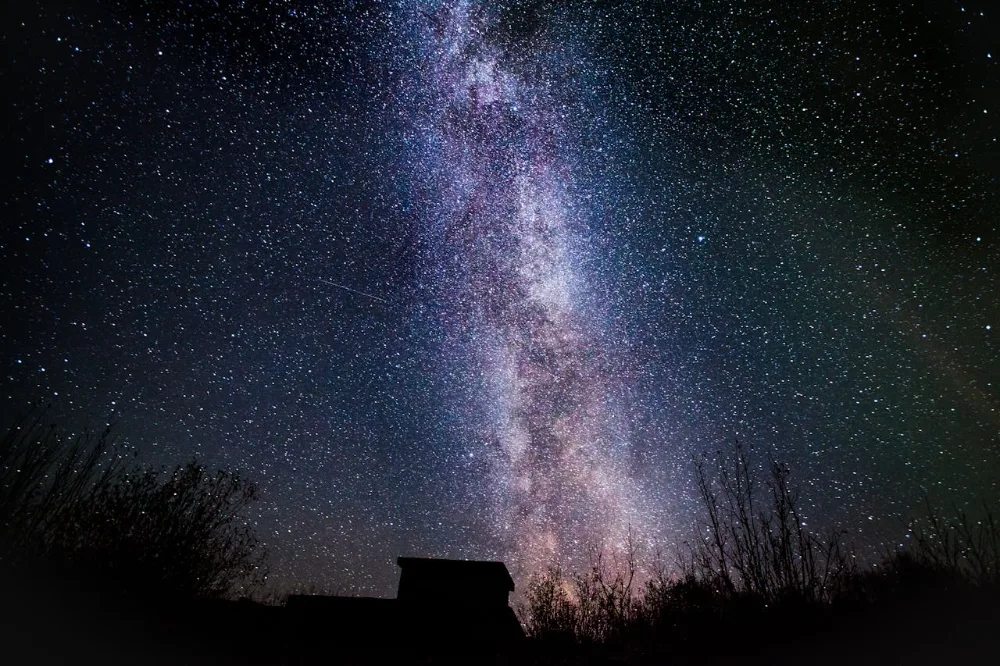
Using your naked eyes, you can see a few stars scattered in the sky. However, you will see a million of them when you use a telescope. On the other hand, scientists have yet to give us a definite answer about how many stars are in the night sky. This is because the stars are gathered together in groups known as galaxies and not just scattered randomly.
For example, the Earth and Sun belong to a galaxy known as the Milky Way. Therefore, it has been estimated that there could be around 100,000 million stars in the Milky Way galaxy alone. Besides that, there are millions of galaxies in the universe, each with billions of stars.
Astronomers have also tried to figure out how to count the number of stars in the different galaxies. They do this by taking detailed pictures of the sky and counting each of the galaxies in the pictures. After that, they multiplied the number of pictures needed to photograph the whole sky. The answer they get is around 2,000,000,000,000 galaxies.
However, they still can't estimate how many stars there are in these 2 trillion galaxies. This is because most of them are distant making it hard to tell the actual number. However, in the Milky Way galaxy, we can guess how many stars there are. This is because the stars exist in different colors and sizes.
For example, the red, white, and blue stars generate different amounts of light in the sky. Astronomers can measure this lighting the stars give off to estimate the number of stars in one galaxy alone. This method of star counting has allowed astronomers to estimate the Milky Way to have 100 billion stars.
With this model, astronomers can multiply the number of stars in the Milky Way galaxy by the number of 2 trillion galaxies. The answer is 200 billion trillion stars all together in the universe. Putting it in number is 200,000,000,000,000,000,000,000.
Conclusion
When you are perplexed about what stars are in the sky tonight or how many there are, the above method from astronomers can help you get an estimate. If you are interested in astronomy and stargazing, learning how to count the number of stars in the sky can be an interesting experience. As more advancements are made in astronomy, more methods will be developed to help us estimate the number of stars in the universe.
FAQs
1. Why is it hard to count all the stars in the night sky?
The distance, brightness, galactic structures, and other factors make counting the number of stars in the sky difficult.
2. How many stars are estimated to be in the Milky Way galaxy?
Astronomers estimate the Milky Way galaxy to have around 100,000 million stars, and there are still millions of them in other galaxies.
Ready to capture your special moment?
Create Your Star Map →