



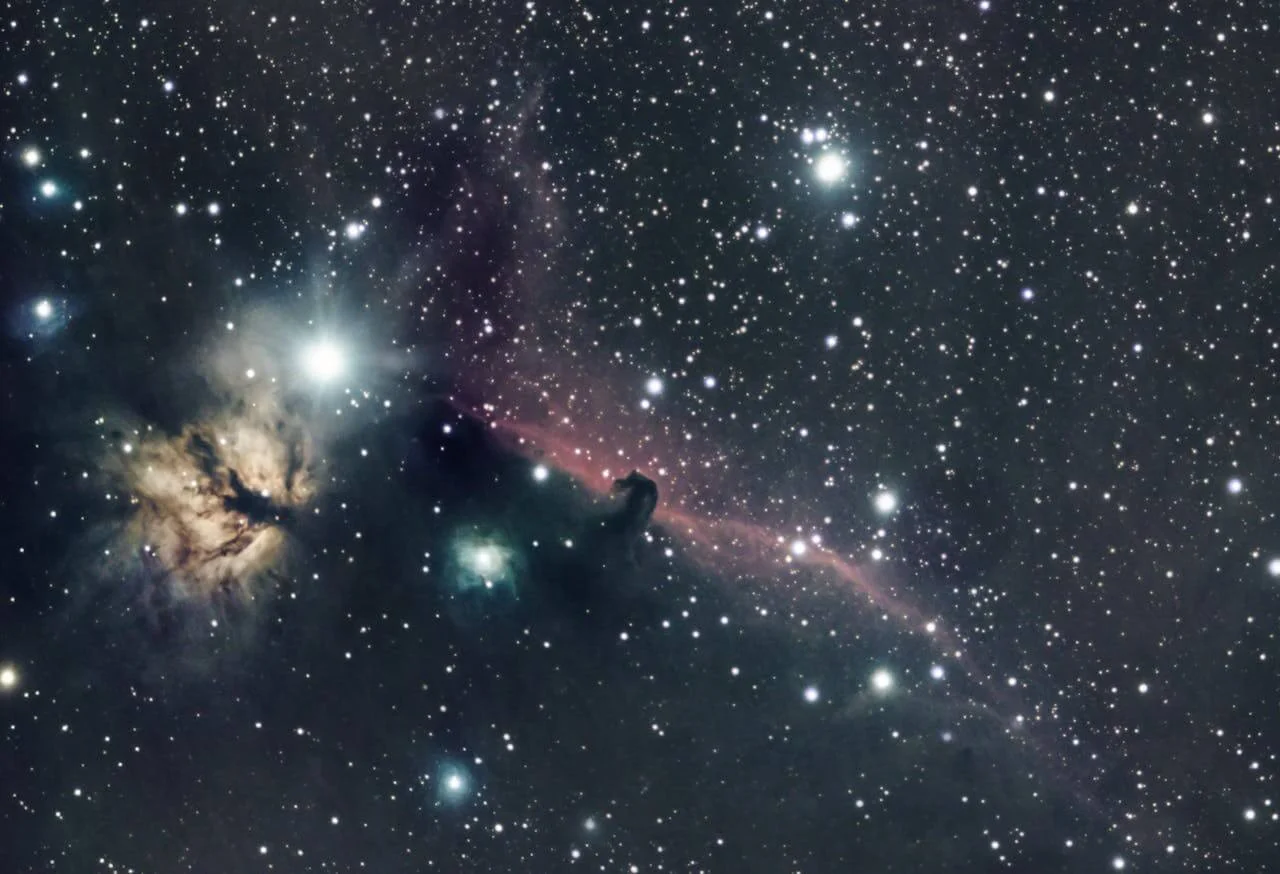
Whenever you gaze up at the night sky, remember each star has its own story written in the language of colours. Every colour shows the vast complexity and beauty of a star. But have you ever thought about the reason for these different colours in a star? Well, that’s a fascinating story.
Astronomers use different ways to characterize the colours of stars and explore different facts about them. If you're curious to know why stars are not all the same colour, continue reading this blog for a deeper understanding.
Star Colours Explained for Beginners
When you look up at the sky, you observe that stars shine with different intensities and have different colors. Some stars emit white light while others are red, blue, or orange. The color in a star is due to various factors, including its temperature, composition, and the light reflection on it.
For instance, stars with high temperatures look blue. On the other hand, stars that look red are usually cool. Let’s explore the other factors that affect the colors of stars.
Why Some Stars Appear White
Stars that have a balanced temperature range emit a broad spectrum of light. This spectrum includes red, blue, yellow, violet, green, and other lights. All these lights, when combined, make white light.
For example, sun that we see from the earth is classified as a G-type sta ars that emit different lights and lie in between cold and hot temperatures. When you see these stars with a telescope, you will observe a bluish tint in their light.
Observing Star Colours
Most frequently, the original color of the star cannot be seen with the naked eye. They are very faint, so you cannot see their original color with the naked eye. You need the proper conditions and the right tool. Sometimes, you have to observe a star for a longer duration to see its color.
Try to observe the stars when there is minimal light pollution. Also, use a telescope as it is the best tool to observe the stars and their various associated factors.
Time of Year
The time of year plays a role in observing star colours because of the Earth’s changing position in its orbit around the Sun. As the Earth moves, the stars we see at night change as well. This affects the visibility of certain star colours depending on the season.
For instance, stars in the summer sky may appear different from those in winter, simply due to their position relative to our planet. You will also notice different constellations and star colours during different months, giving you the opportunity to study various types of stars.
Light Pollution
Light pollution is a major factor that has a significant effect on the visualization of the stars. In the urban areas, the environment always remains illuminated due to the artificial lights of street lights, houses, and buildings. In the presence of this light, stars fade with the environment and cannot be seen with the naked eye.
However, in the remote areas, far away from the artificial lights, you can observe the actual colors of the stars on the big open horizon.
Telescopes & Binoculars
Using telescopes and binoculars can significantly enhance your stargazing experience. While the naked eye is capable of spotting bright stars and constellations, telescopes and binoculars allow you to zoom in on individual stars, revealing their true colours.
A good telescope will also help you observe distant stars that may not be visible without optical enhancement. With the right equipment, you can distinguish between stars of various colours, from blue giants to red dwarfs, and gain a better understanding of their properties.
Dark Adaptation
Dark adaptation is the time when your eyes adjust to the darkness of the environment. This is the condition of your eyes when you start seeing things clearly in the dark. It does not come right after you leave your house at night and go to a darker place. Your eyes need 30 to 40 minutes to adjust to the darkness to have a clear view. When your eyes become adapted to the dark, you can see stars and their different colors.
Factors That Affect Colour In A Star
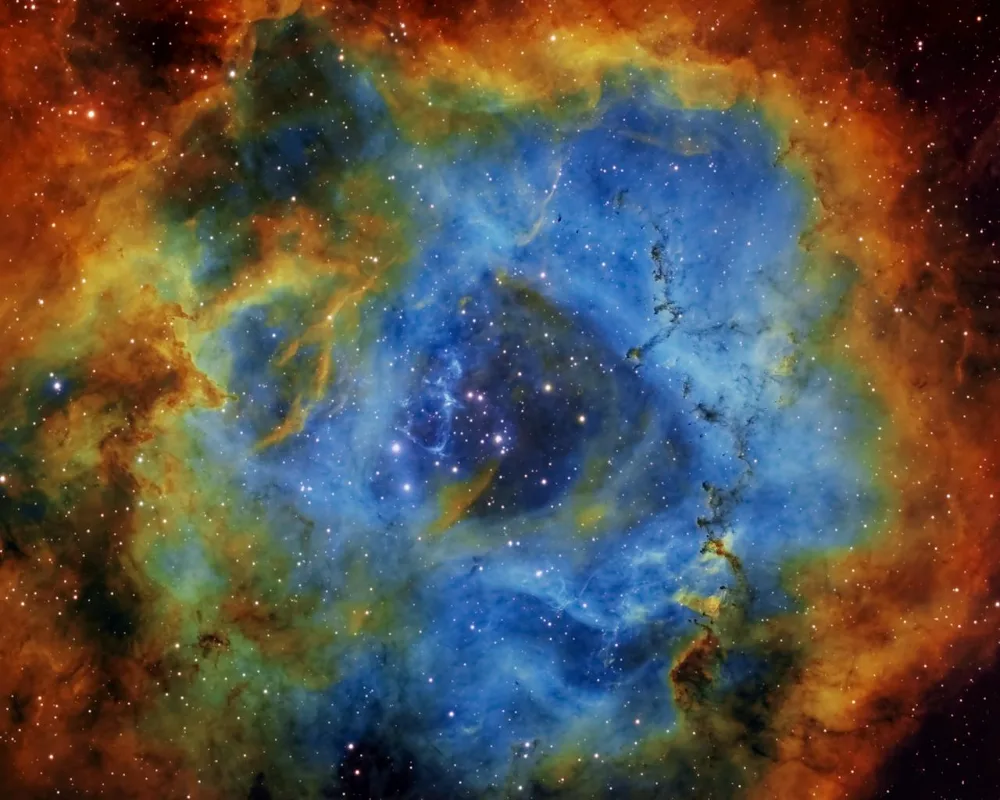
There are different factors that affect the colour of a star. Let’s throw light on some of the key factors:
Surface Temperature
Star colours are a great indication of their surface temperature. When the temperature of a star increases, more gas and fuel burn within it. As a result, it becomes hotter.
The hottest stars are usually blue as they have a temperature of 40,000ºC. On the other hand, the coolest stars are red with a temperature of 3,000ºC. Take a look at the table below to find out the different colours of stars and their temperature.
|
Colour |
Temperature(K) |
|
Blue |
28,000-50,000 |
|
White |
7500-10,000 |
|
Yellow |
5000-6000 |
|
Orange |
3500-5000 |
|
Red |
2000-3500 |
Luminosity
The luminosity and size of a star also affect its colour perception. For instance, though high luminous stars have hotter temperatures, they appear to be yellow or red because of their great energy output and big sizes.
On the other hand, stars with low luminosity appear to be dimmer and redder no matter what their temperature is.
Spectral Class
Stars are classified into different spectral types based on their temperature and spectral lines. Stars with classes O and B are blue, A stars are white, G stars are yellow, and M stars are red.
Chemical Composition
The chemical composition of a star also has a great impact on its colour. Though this is a secondary effect compared to temperature, astronomers always consider it. If a star does not have enough metal, it appears to be hotter and bluer, whereas rich metals appear to be yellowish and slightly cooler.
Age
The temperature and luminosity of a star keep on changing with age. Similar is the case with the colours. Usually, a young star is very hot and appears to be blue whereas an old star is cooler and appears to be reddish.
Observational Effects
One of the most important factors in perceiving the colours of stars is their observational effect. If you are observing from Earth, distance and dust or gas can change the apparent colour of the observed star.
Classifying Star Colours
Here is a simplified breakdown of stars on the basis of their colours:
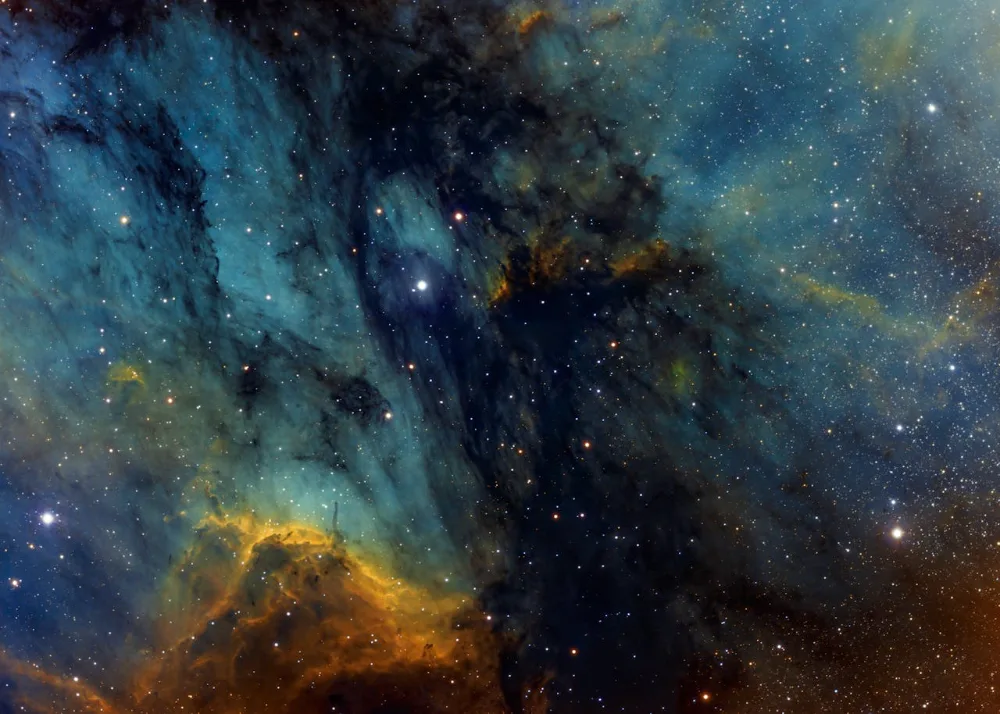
1. Blue Stars
Blue stars are the hottest and the most luminous stars in the universe. Therefore, they have a great role in the study of stellar evolution and astrophysics. They emit significant radiation because of their high temperatures, and their luminosity is millions of times greater than our sun. They are mostly classified into the following spectral types:
O-Type Stars
The temperature of the stars belonging to O-Type is greater than 30,000 K and is a quite rare class in the universe.
B-Type Stars
The temperature of these stars ranges from 10,000 to 30,000K. They emit blue light and are quite luminous.
But remember, blue stars usually have shorter lifespans as compared to cooler stars.
2. White Stars
These stars emit a balanced spectrum of light that appears white or slightly blue. Their luminosity varies depending on the size and age. They are found at different stages of life and are classified into the following spectral types:
A-Type Stars
These stars have temperatures between 7500K-10,000K. They are quite young and emit strong absorption lines.
Early F-Type Stars
These stars' temperatures range between 6000K and 7500 K. They are cooler than A-type stars but emit white light.
3. Yellow Stars
Our sun is a huge example of yellow stars. Yellow stars have a yellowish-white appearance and are necessary for life in the universe. They belong to the following spectral types:
G-Type Stars
These stars have temperatures around 5500K and emit light across the visible spectrum.
Moreover, the luminosity of yellow stars also depends on their size and age. For example, the sun belongs to the main sequence stars because it is in a stable phase of hydrogen burning, so its luminosity remains stable over a long period of time. It will take several billion years to expand into a red giant.
4. Orange Stars
Orange stars emit light in the orange-red part of the spectrum and appear to be orangish-red in colour. They are cooler than yellow stars but hotter than red stars. They are very important for astronomers to study later stages of stellar evolution. They belong to the following spectral types:
K-Type Stars
Temperatures of these stars range between 3500-5000K. Though they emit light across the visible spectrum, they appear to be orange because of their temperature.
Moreover, depending on their age, they range from main-sequence stars to giants and supergiants. Some of them become red giants as they expand and become cooler.
5. Red Stars
This is the most fascinating category of stars because of their deep red colouration. Based on their size and luminosity, they can be small red dwarfs to large red giants. But they spend most of their lives in the main sequence while burning hydrogen to helium.
Red stars usually belong to the following spectral types:
M-Type Stars
These are the most common and coolest stars in the universe. Their temperature ranges from 2000 K to 3500 K, and has a beautiful deep red colour.
L-Type And T-Type Stars
They are not actually stars but substellar objects. They are cooler than M-type stars and emit energy in the infrared spectrum.
Conclusion
In short, studying the colours in a star is not a simple task. In fact, you need a lot of information about their characteristics, evolution, and spectral types. We hope this guide will help you to deepen your understanding of star colours. To enhance your study, using a star map can be incredibly useful. A star map not only shows the positions of stars but also provides details about their colors and other characteristics.
FAQ
What Are the Different Colors of a Star?
Stars have different colors that showcase their temperature and lifespan. For example, blue stars are the hottest ones. Then comes white, yellow, orange, and red. Red stars have the lowest temperature compared to other stars.
What Are the 7 Types of Stars?
Stars are typically classified into spectral types based on their temperature. The seven main types are:
- O-Type (Blue, the hottest stars)
- B-Type (Blue-White)
- A-Type (White)
- F-Type (Yellow-White)
- G-Type (Yellow, like our Sun)
- K-Type (Orange)
- M-Type (Red, the coolest stars)
What Are the 7 Colors of the Star from Coolest to Hottest?
From coolest to hottest, the star colours are:
- Red
- Orange
- Yellow
- Yellow-White
- White
- Blue-White
- Blue
What Is the Rarest Star Color?
The rarest star colour is green. Although there are stars that appear green, this is usually due to observational effects or the star's spectrum being heavily influenced by nearby materials. True green stars are extremely rare because of the way the stellar spectrum works.
Ready to capture your special moment?
Create Your Star Map